Hello there my fellow FPS fanatics! Today I will be talking about one of the first person shooter games that is climbing up on the eSports scene on the FPS category! This game has been a long-standing class A title over the years, both on console and PC. It also has one of the best storylines out there out of the FPS series. Aside from that, this game also boasts one of the most dynamic battle mechanics and graphics out there.
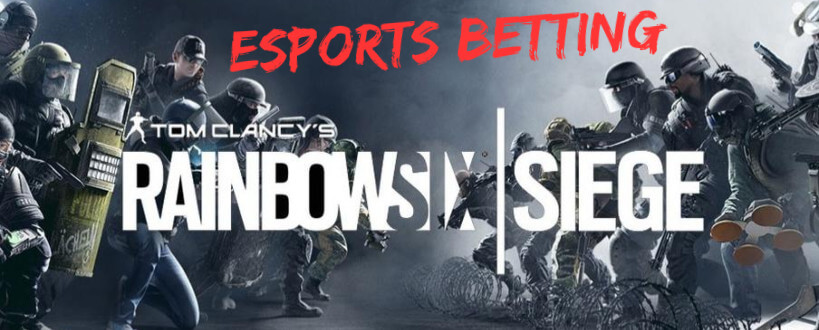
If you are thinking about Rainbow Six, then you guessed it right! Rainbow Six has been slowly creeping up on the eSports scene lately with its latest edition, Rainbow Six Siege. Today, I will be talking about R6, its future in the eSports scene and the best part of all, how we can root for our teams and bet to make us some money. So grab yourself a cold drink and explore Rainbow Six scene and betting with me.
Origins of Rainbow Six
Rainbow Six has been a staple first-person shooter game way back in the first Playstation console. I remembered the glory days of it playing with my brother on split screen way back in 1999. This title has followed closely on what Tom Clancy, the original writer of the novel wrote, down to the names of the characters on the first edition when you play story mode.
In Rainbow Six, you play as an operator from one of the famous Counter Terrorist and Spec Ops units that can be found worldwide. In the story mode, you get to respond to scenarios where the expertise of these operatives. These operatives have variations in their skill sets and a team crafted of operatives with very good skill sets are critical for the mission success. You get to learn all of them while playing story mode.
However, the real fun starts after you have finished the story mode and go to the Covert Ops. This is where you can play multiplayer battles with your friends on either the same console or through LAN connectivity of different consoles. The original R6 game does not have a very good multiplayer interface for the consoles and the gameplay was a little bit sluggish.
Then came Rogue Spear, the second expansion of the R6 series. This had one of the best multiplayer clients loaded on the PC game. I have spent countless hours with my friends playing not the story mode of this game, but the vast multiplayer it has to offer. With the close to realistic mechanics that it was offering at that time, it offered a very tactical sense of gameplay that cannot be found on the Counter Strike series or the Call of Duty series back then.
The birth of the major Rainbow 6 eSports
The modern competitive side of Rainbow Six did not truly take shape until the release of Rainbow Six Siege. While earlier titles like Rogue Spear, Vegas, and Vegas 2 had small competitive scenes and LAN tournaments, they lacked long-term structure and consistent publisher support.
Siege changed that completely. Ubisoft took direct control of the competitive ecosystem, building a publisher-led structure instead of relying on third-party organizers alone. This marked a turning point for Rainbow Six as an esport, moving it away from occasional tournaments and into a stable, season-based competitive environment.
Rather than focusing on grassroots LAN events, Siege esports was designed around regional leagues feeding into international competitions. This gave teams clearer paths to the top level and allowed the scene to grow steadily instead of burning out early.
Rainbow 6 Siege release
When Siege launched in 2015, it marked a reset for the franchise rather than a continuation of previous titles. Ubisoft leaned heavily into tactical realism, destructible environments, and operator-based gameplay, creating something that stood apart from faster, arcade-style shooters.
Over the years, Siege has gone through multiple ranked and matchmaking revisions. The early systems were refined into a more competitive structure, with clearer skill tiers, role definition, and operator bans becoming a central part of high-level play. These changes helped separate casual matches from serious competitive environments.
The constant addition of new operators, reworked maps, and balance updates has kept the game evolving. While this sometimes created learning curves for players, it also ensured that the competitive meta never stayed stagnant for too long.
Competitive teams and tournament structure
Today, Rainbow Six Siege esports is built around a clear international structure, with regional leagues leading into global events. The Six Invitational has become the centerpiece of the competitive calendar, serving as the most prestigious tournament in the scene.
Over time, regional dominance has shifted. European teams remain strong, while Brazilian squads have emerged as consistent title contenders. Organizations such as G2, FaZe, Team BDS, W7M, and Team Liquid have defined different eras of Siege competition, each bringing their own playstyle and approach to the game.
Unlike some FPS titles where individual mechanical skill dominates, Siege rewards preparation, coordination, and map knowledge. This makes long-term success harder to maintain but also makes matches more interesting to follow.
Esports Betting
As the Siege esports scene matured, betting markets followed naturally. Today, most betting activity focuses on international tournaments and major regional leagues rather than small standalone events.
Standard markets such as match winners and series outcomes remain popular, but Siege also offers more game-specific betting options. These include map winners, total rounds played, series scorelines, and operator ban outcomes. Because Siege is highly tactical, understanding map pools and team preferences often matters more than raw win rates.
For anyone new to betting on Siege, the best advice remains simple: follow at least one full tournament before placing complex bets. Siege rewards knowledge and preparation, and rushing into advanced markets without understanding how teams approach different maps can lead to unnecessary losses.
The Future of Siege
I am happy to say that the competitive and esports scene for Siege is here to stay. Ubisoft has shown long-term commitment to the game through regular content updates, structured leagues, and consistent support for international events.
Siege has carved out its own place in the FPS esports space. It does not try to compete directly with faster shooters like Counter-Strike or Call of Duty. Instead, it offers a slower, more methodical experience that rewards planning, communication, and adaptability.
As long as Ubisoft continues to balance competitive integrity with regular updates, Siege is likely to remain a core tactical FPS esport for years to come. For players willing to invest time into learning its systems, there are still clear paths from ranked play to professional competition.