
League of Legends is a competitive game played by two teams of five players, and from its early esports days to 2026 it has grown into one of the most played and watched esports titles in the world. Continuous updates, new champions, balance changes, and major international tournaments have kept the game fresh year after year, allowing players to showcase skill, teamwork, and strategy at the highest level.
With such a strong professional scene, it was only natural for League of Legends to appear on betting markets. Today, LoL betting is available at many licensed sportsbooks, offering a wide range of markets connected to professional matches and tournaments. In this article, we will look at the most common types of League of Legends bets and explain how the game itself works, so that everything makes sense even if you are new to esports betting.
Esports betting now stands alongside traditional sports betting, giving fans another way to engage with games like League of Legends, Dota 2, Counter-Strike 2, and more. Below, you will find an overview of the most popular betting markets and a practical explanation of how League of Legends matches are played.
Type of bets
Match winner
The simplest and most common bet in League of Legends is the match winner. You are betting on which team will win the match or series. Odds are influenced by team strength, recent results, player form, and tournament importance.
Most professional matches are played in series formats such as Best of 1, Best of 3, or Best of 5. This matters for betting, as longer series usually reduce randomness and give stronger teams more room to recover from early mistakes.
Kill Totals (Over / Under)
Kills play an important role in League of Legends, as they provide gold and momentum. One popular betting market involves predicting whether the total number of kills in a match or map will be over or under a set line.
Some teams prefer slow, controlled gameplay focused on objectives, while others thrive in aggressive, fight-heavy matches. Understanding team playstyles, patch changes, and champion choices is especially important for this type of bet.
Special Kill Bets (First Blood, Multikills)
Special bets focus on specific moments in a match. Common examples include first blood, which team gets the first kill, or whether a multikill such as a triple or quadra kill occurs.
These markets are usually high-variance and settle quickly, making them popular for viewers who want fast outcomes. However, they are also harder to predict consistently and often come with lower betting limits.
Championship and Stage Winner
Tournament winner bets are among the most challenging. Predicting the winner of a major event like the World Championship requires deep knowledge of regions, team depth, schedules, and adaptability across patches.
Many sportsbooks also offer stage-based markets, such as which teams will reach playoffs, semifinals, or finals. These options allow bettors to focus on long-term performance rather than single-match results.
Special Statistics and Tournament Markets
Some bookmakers offer advanced markets based on statistics, such as average kills per match, total objectives taken, or gold differences. These bets require strong analytical understanding and are best suited for experienced viewers who follow professional play closely.
League of legends tutorial and basics.
5 vs 5, only one team can reach the final glory. That sentence still perfectly defines League of Legends. In this part, we’ll go through how a standard LoL match is played, from champion selection all the way to the destruction of the enemy Nexus.
To get started, you need a Riot account. New players begin by playing against bots or in beginner-friendly modes to learn the basics. As you gain experience, you unlock normal PvP games and gradually move into the full competitive environment.
Level and rank
League of Legends no longer has a strict level cap that limits progression. Your account level continues to increase as you play, unlocking champions, summoner spells, and cosmetic rewards along the way. Early matchmaking is designed to place you against players of similar experience, so you can learn without being overwhelmed.
Ranked play becomes available once you meet Riot’s eligibility requirements, including owning a sufficient number of champions. From there, competitive matchmaking begins.
The ranked system is divided into tiers that represent player skill. These tiers are Iron, Bronze, Silver, Gold, Platinum, Emerald, Diamond, Master, Grandmaster, and Challenger. Each tier (except the top ones) is split into divisions, and by winning games you earn League Points that allow you to climb.
At the start of each ranked season, players complete placement matches to determine their initial rank. From that point on, consistent performance and improvement are what decide how far you climb.
Type of champions
hampions in League of Legends generally fall into different damage and playstyle categories.
Attack Damage (AD) champions deal most of their damage through basic attacks and physical abilities. These champions are most commonly played as ADCs in the bot lane, but they can also appear in top lane, mid lane, or jungle depending on the meta.
Ability Power (AP) champions rely mainly on spells to deal magic damage. These champions are most often seen in the mid lane, jungle, or support role, where their abilities can control fights or burst enemies down quickly.
Hybrid champions can scale with both attack damage and ability power. While less common, these champions offer flexibility and can be built differently depending on the team composition and game situation.
Roles of play
Winning a League of Legends match always comes down to one objective: destroying the enemy Nexus. To reach it, teams must push through turrets, control the map, and win fights. The map is divided into three lanes – Top, Mid, and Bot – but five players means five distinct roles.
Top Lane usually features durable champions that can survive on their own. Top laners often play tanks or fighters who become very strong in the mid and late game. This lane is often isolated early, making individual skill and matchup knowledge extremely important.
Mid Lane is the center of the map and often the most influential role. Mid laners usually deal high damage and can roam to other lanes to create advantages. Both AP and AD champions are played here, depending on playstyle and strategy.
Bot Lane is the only lane with two players on each side. The ADC focuses on dealing sustained damage and scaling into the late game, while the Support protects teammates, controls vision, and sets up plays. Many consider the support to be the shot-caller of the team due to their map awareness.
The final role is the Jungler. Instead of staying in a lane, the jungler gains experience and gold by clearing jungle camps. Junglers also pressure lanes through ganks, secure neutral objectives like dragons and Baron, and often decide the pace of the match.
What you need to do to win a league of legends game?
For sure you need to be the best. How can you be like that? Well, this is not so hard. The most important thing is to gain more gold than your enemy. For sure the final objective is to destroy enemy’s nexus but how can you get so far?
Having more gold means better items than your opponent. Items are helping you develop and grow in strength during a game. Having more items you’re damage and ability effects will be increased and it will be much easier for you to win a game.
KILL THE MINIONS! Yeah guys do not forget this! Killing minions is the only way that you can earn gold in the first phase of the action. Killing more minions than your enemy can represent an advantage. You can use this knowledge while making bets on League of Legends.
Champions
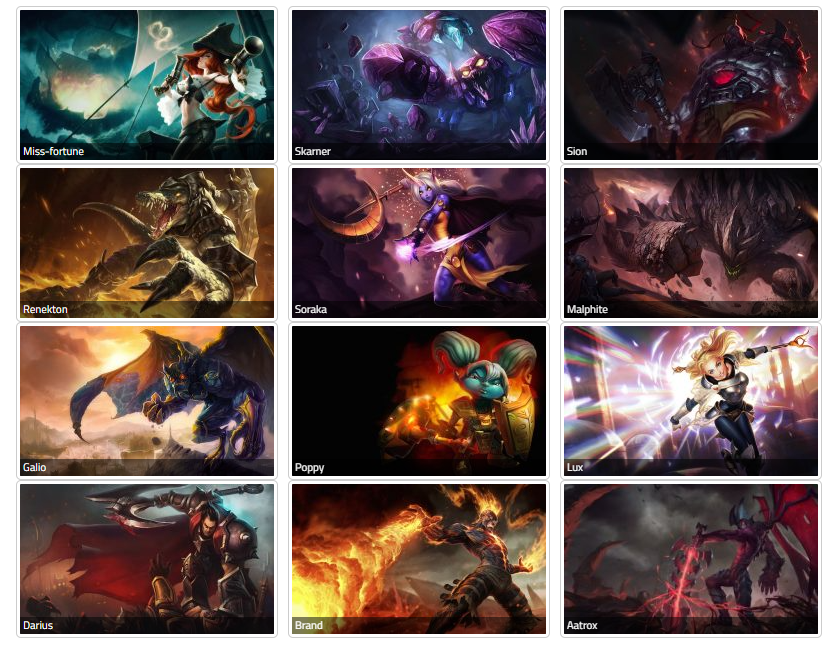
Every week LoL is giving a rotation of free champions with which one you can try To be able to play constantly with a champion that you like you need to buy them using Influence points (made by playing) or Riot Points (deposit).
What I’m finding so beautiful at this game? It is in a continuous change. From time to time Riot is launching new champions, new items to buy, modify the structure of some runes and so on to make the game more and more attractive.
Type of games
The most important games that you can play in league of legends are:
- Summoner’s Rift – 5 vs 5. The most important games ranked or normal are being played here. Almost all of the professional Lol betting events are played on this map of glory and magnificent. Duration of a normal match is 30-45 minutes.
- Twisted Treeline – 3 vs 3. Just two lanes with two towers each. Usually, time of play is 20-30 minutes.
- Howling Abyss – 5 vs 5. The most interactive type of game these days. 5 vs 5 players with random champions are fighting in a lane to reach final glory! Normal duration of a match is 20-30 minutes.
The most important games that LoL is offering at special occasions are:
- Ultra Rapid Fire – Played on Summoner’s Rift, in normal cases 5 vs 5, this one is my favorite type. All the cool down reduction of skills is increased up to 80% which is making spam of buttons to be even bigger.
- Doom Bots – Same on Summoner’s Rift, this mode is taking usually exactly 17 minutes. In a game where a player is in total disadvantage and bots are just going mad, winning a match reach the level of impossible.
- Hexakill mode – We all want to kill 5 enemies and make a penta kill. But what about hexa kill? Played on twisted treeline but sometimes on Summoner’s Rift, this mode is 6 vs 6 and allows you to reach FINAL GLORY!!! HEXAKILL
- One for All – Still on Summoner’s Rift a mode where all the players are playing with the same hero.
The greatest Lol tournaments
Every year, the League of Legends competitive season reaches its peak with the World Championship. This event is widely considered the biggest and most important tournament in LoL esports, bringing together the strongest teams from every major region to compete for international glory.
The World Championship has become a true tradition within the gaming community. Since the first edition in 2011, it has grown into a global spectacle followed by millions of fans worldwide. What makes Worlds so special is not only the prestige, but the journey teams must go through to get there. Qualification requires consistent performance across regional leagues, playoffs, and international stages.
Over the years, League of Legends has continued to grow in popularity, attracting sponsors, media attention, and a massive global audience. By the mid-2010s, LoL had already established itself as one of the most played and watched games in the world, and that momentum has carried forward into the modern era. Today, the World Championship remains the most anticipated event of the LoL calendar and one of the biggest esports events overall.
From a betting perspective, the World Championship is also the most active period of the year. Bookmakers offer a wide range of markets throughout the tournament, including match winners, series results, stage outcomes, and long-term predictions. The long format of the event, combined with best-of-series matches, gives bettors plenty of data to analyze and follow.
Beyond Worlds, League of Legends features several other major international and regional competitions. The Mid-Season Invitational (MSI) brings together top teams from each region halfway through the season, offering a clear look at how regions compare on the global stage. Regional leagues such as the LCK, LPL, LEC, and LCS run throughout the year and form the backbone of competitive LoL, producing the teams that eventually qualify for international events.
In addition to top-tier competitions, there are many smaller regional and national tournaments organized by sponsors and local leagues. These events may not carry the same prestige as Worlds or MSI, but they play an important role in developing talent and giving teams a chance to prove themselves. Prize pools vary widely depending on the organizer, but the real value often lies in experience, exposure, and qualification opportunities.
Altogether, League of Legends esports is built around a structured competitive system where teams advance through regional play, international events, and championship stages. This structure keeps the scene active year-round and provides constant content for fans, analysts, and bettors alike.
Outside of professional competition, League of Legends has also created opportunities through content creation and streaming. Platforms like Twitch and YouTube allow players to build audiences by showcasing gameplay, analysis, or entertainment. While success in streaming requires dedication and creativity, it has become an important part of the wider LoL ecosystem and another way players engage with the game beyond competition.
League of Legends tournaments are ultimately about skill, teamwork, and consistency. Whether you follow them as a fan, analyze them as a bettor, or enjoy watching high-level play, these events remain the foundation of what makes LoL one of the most enduring esports titles in the world.
Legendary League of Legends players
Over the years, League of Legends has produced players who not only won trophies, but also shaped how the game is played at the highest level. Below are some of the most influential names in LoL esports history, known for their skill, consistency, and impact on the competitive scene.
Bang
Bang built his reputation through consistency rather than flashy plays. Early in his career, he was known as a strong solo queue player, but his true potential became clear after joining SK Telecom T1. As an ADC, Bang was reliable in pressure situations and played a key role in multiple championship-winning rosters.
His strength came from positioning, decision-making, and the ability to perform in late-game team fights. Bang helped define what a stable, disciplined ADC looked like at the highest level of professional play.

DoubleLift
Doublelift is one of the most iconic players in North American League of Legends history. Known for strong laning and confidence in high-pressure moments, he dominated domestic competition for many years.
While international titles proved elusive, his influence on the NA scene is undeniable. Doublelift helped raise the profile of competitive League of Legends in North America and set new standards for the ADC role in the region.

Piccaboo
Piccaboo stood out as one of the most aggressive and unpredictable support players of his era. Unlike traditional supports who focused mainly on protection, Piccaboo frequently roamed early and applied pressure across the map.
His playstyle forced teams to adapt and showed how much impact a support could have beyond the bot lane. Piccaboo’s creativity made him a constant threat and a difficult player to prepare against.
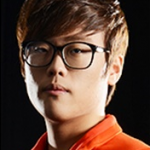
Aphromoo
Aphromoo became known not only for his gameplay, but also for his leadership. As a long-time captain of Counter Logic Gaming, he played an important role in shaping team communication and coordination.
Starting his career as an ADC before transitioning to support, Aphromoo developed into a vocal leader who emphasized teamwork and consistency. His influence extended beyond mechanics, helping teams stay composed in difficult matches.

Ziv
Ziv made his mark as one of the strongest top laners during the 2015 season. His controlled playstyle, lane dominance, and understanding of team fights earned him recognition as one of the best players in his role during that period.
While League of Legends is a team game, Ziv’s presence often gave his team a strong foundation to build around, especially in structured, macro-focused matches.

Bjergsen
Bjergsen is widely regarded as one of the greatest Western mid laners in League of Legends history. Originally from Europe, he became a dominant force in North America, known for mechanical precision and calm decision-making.
His ability to control games from the mid lane, adapt to different metas, and remain consistent over many seasons made him a central figure in professional LoL for nearly a decade.

Huni
Huni brought aggression and unpredictability to the top lane. Known for bold picks and fearless play, he was often willing to take risks that other players avoided.
What set Huni apart was his balance between confidence and timing. While aggressive by nature, he understood when to engage and when to hold back, making him a valuable and flexible player across multiple teams and regions.

Ssumday
Ssumday established himself as one of the most mechanically gifted top laners of his generation. His ability to identify small advantages and turn them into winning positions made him a constant threat in lane.
Known for efficiency and consistency, Ssumday’s performances often stood out even when his team struggled, highlighting his individual skill and understanding of the game.

Imp
Imp gained recognition for his exceptional ADC mechanics and late-game dominance. Famous for champions like Vayne, he showed how an ADC could single-handedly swing team fights when properly positioned.
His calm approach and confidence in high-pressure moments made him one of the most respected carry players of his era.

Faker
Faker is widely considered the greatest League of Legends player of all time. His influence on the game goes far beyond trophies. Known for unmatched mechanics, adaptability, and game sense, Faker consistently performed at the highest level across multiple metas and seasons.
His mastery of champions like Ahri and LeBlanc redefined mid lane play, and his longevity at the top of professional League of Legends remains unmatched. Faker’s career set the benchmark for excellence in esports.

These players represent different eras, roles, and playstyles, but all of them left a lasting mark on League of Legends esports. Studying their games is still one of the best ways to understand how top-level League of Legends is played.